The Forest Beneath the Canopy: How Understory Vegetation Influences Long-term Forest Development and Durability
September 9, 2026
Understory vegetation can sometimes be overlooked relative to the canopy, but it often holds clues to what the future forest will look like and can shade forest development for decades.
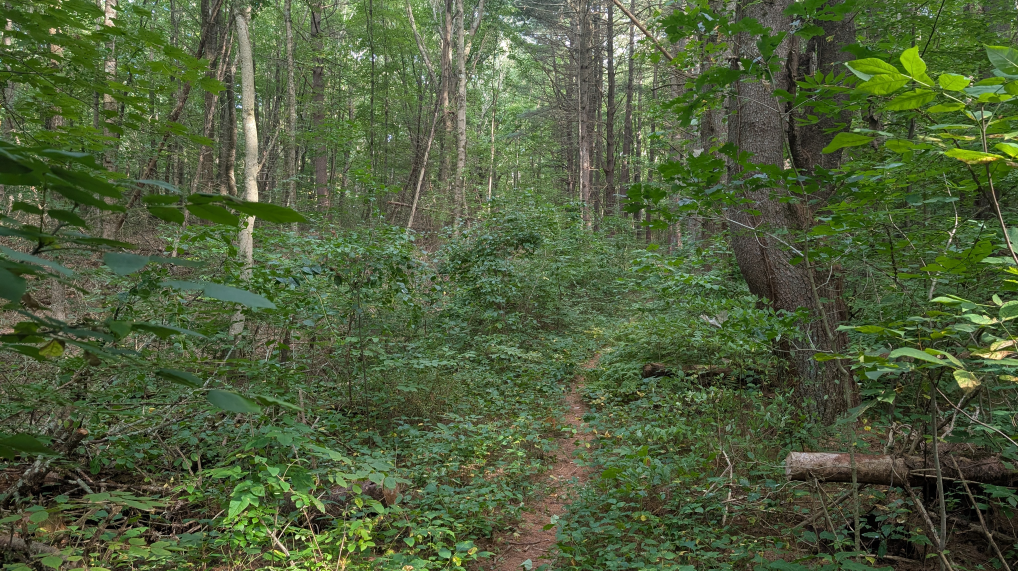
Walk into most forests and people’s attention often turn upward. Towering trunks, a canopy of interwoven branches with shafts of light breaking through the leaves. Stare long enough and you might begin to feel your neck stiffen and become sore. Foresters even have a name for this: Forester’s neck (we’re super creative). Down on the ground, though, ferns, herbaceous plants, seedlings, mosses, and shrubs make up an understory that is already deciding how the forest will develop into the future. This is where the real action happens.
Understory plants make up a surprisingly small slice of a forest's total biomass, something like 6%, yet they provide significant ecological benefits. They cycle nutrients, build soil and soil carbon, shelter insects and small mammals, and determine which tree seedlings even get a shot at reaching the canopy. Decades of research at Hubbard Brook Experimental Forest have shown how much of a forest's nutrient economy runs through understory. With significant disturbances, the whole system's chemistry shifts.
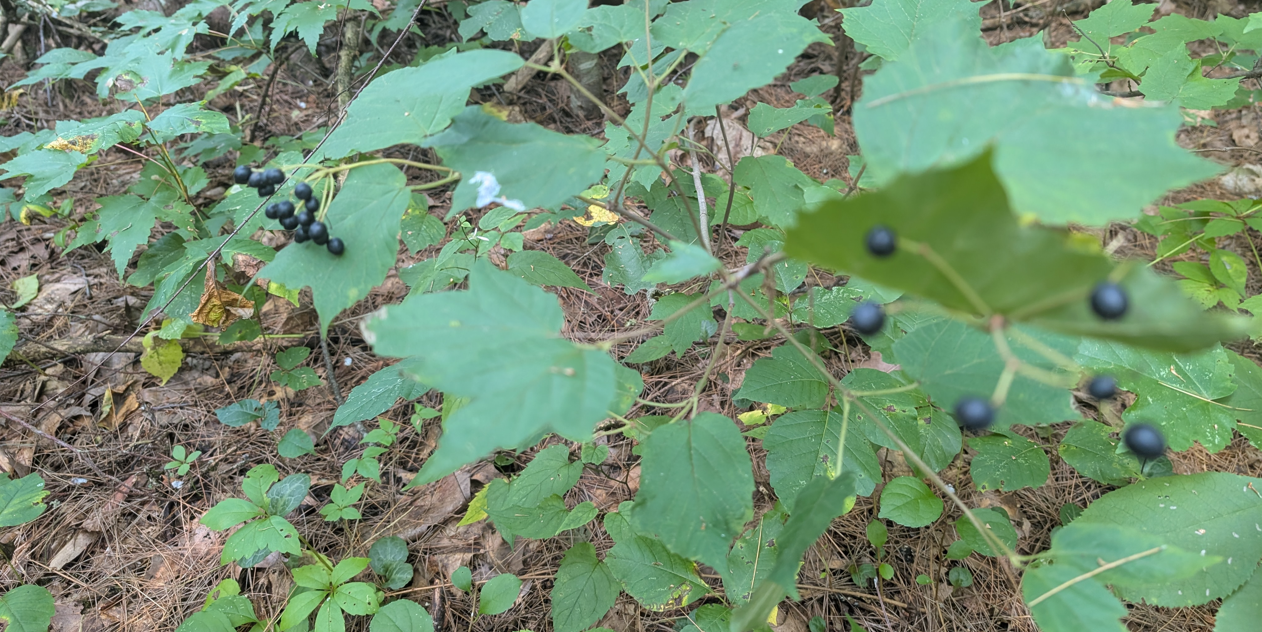
Maple-leaf viburnum grows berries that are a valuable food source for wildlife. For anyone who manages forestland this matters quite a bit. Every time a canopy gap opens, whether that’s from a strong storm blowing over trees, a harvest operation, or natural senescence, sunlight reaches the forest floor and provides much needed solar energy to plants that have been waiting patiently. This can release advance tree regeneration (trees that are already regenerated and are present when the gap is created) or accelerate new regeneration. Other plants will take advantage too, of course.
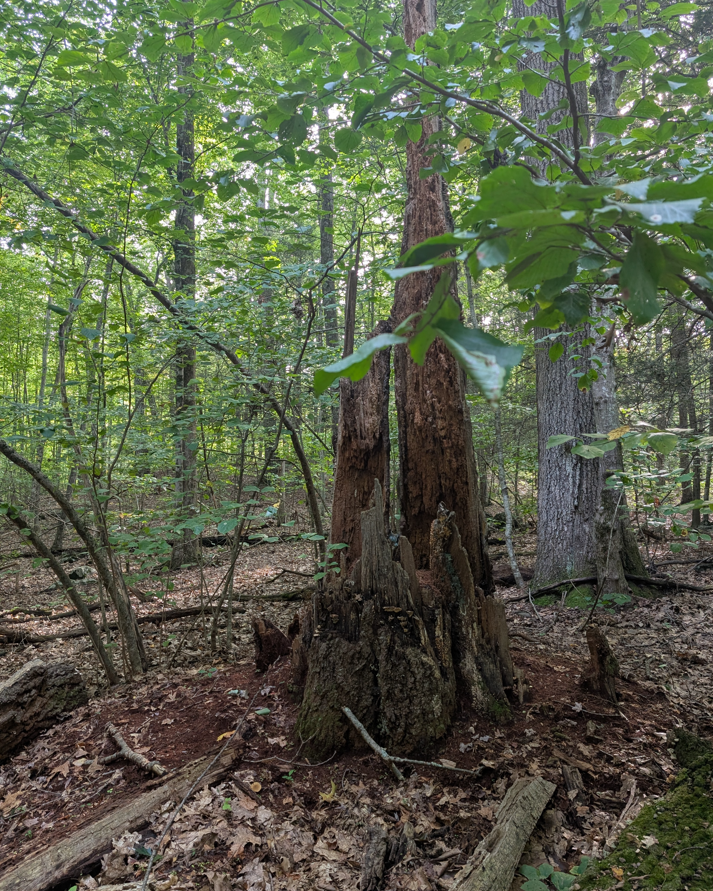
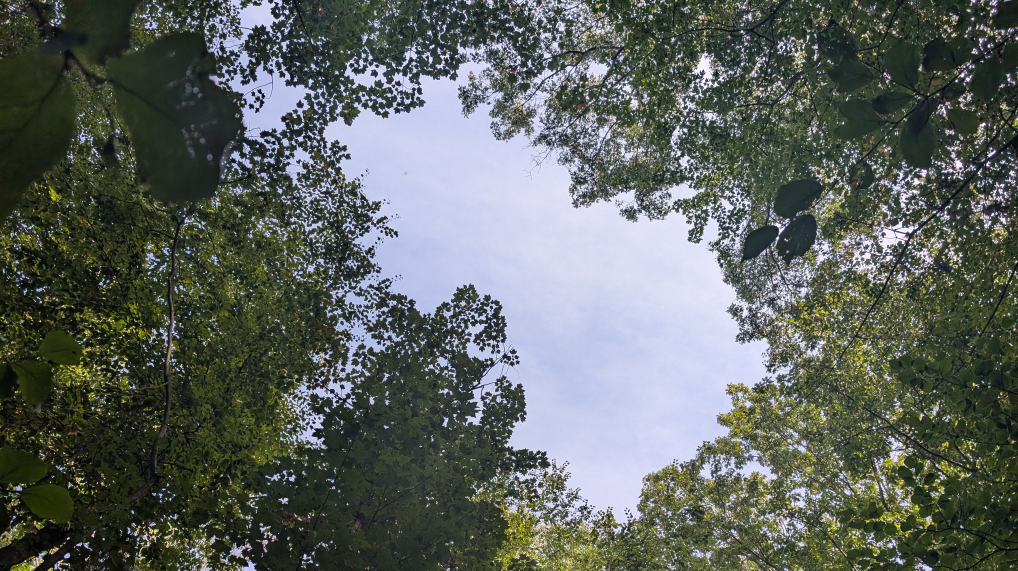
Stump of a fallen black oak (Quercus velutina). Mushrooms present on the stump and large amounts of decay in the bole (off-screen) suggest this tree was heavily rotted before recently falling. Canopy gap created by the fallen black oak.
In extreme cases, shrubs, vines, and herbaceous plants can become so successful they suppress tree growth altogether. Ecologists call it a recalcitrant understory layer: a native fern, shrub, or bramble that spreads so thick after a disturbance it locks the door behind itself. Hay-scented fern is one example, now blanketing more than a third of Pennsylvania's forested land and holding some 50- to 80-year-old clearcuts treeless to this day. That's the extreme case, though. Far more often, the real contest is between tree species.
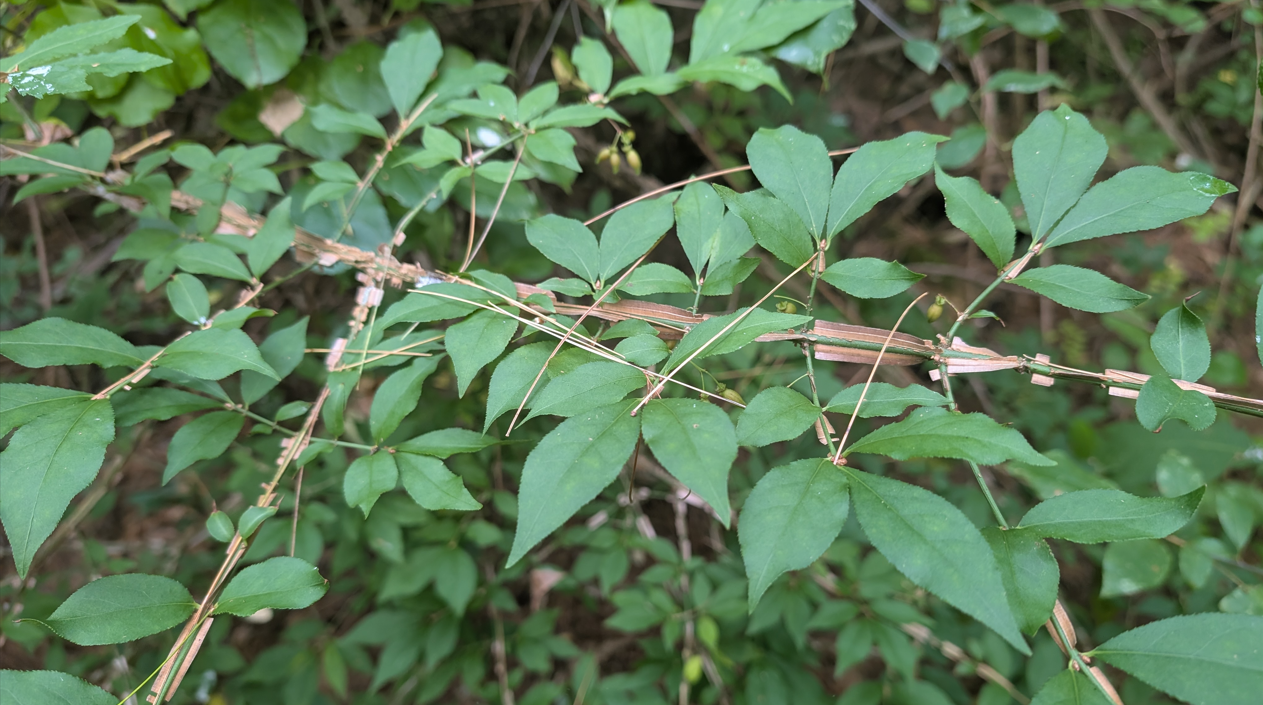
Winged Euonymus (Euonymus alatus), along with other invasive plants, can stifle native regeneration in the understory and will often gain a significant competitive advantage when exposed to increased sunlight in canopy gaps.
Some tree species are more shade tolerant than others, and gap size is usually the deciding factor in which tree species benefit the most. Researchers studying tropical forests noticed decades ago that tree species split into two rough camps: pioneers, which need a large amount of sunshine to germinate at all and then grow quickly to take advantage of it, and shade-tolerant species that can sit and wait for years under a closed canopy before surging the moment they get a chance. Small gaps tend to favor whichever patient seedlings were already present while large clearings tilt the advantage to fast-growing pioneers.
Understory conditions end up steering real management decisions. Foresters in the southern Appalachians and northeastern US trying to regenerate red oak learned that oak seedlings often sit patiently in the understory for years, but the moment a stand opens up, faster-growing yellow-poplar, other shade intolerant species, or red maple stump sprouts can outcompete oak seedlings if left untreated. Researchers eventually worked out a staged shelterwood harvest as a workaround, thinning the overstory to a density calibrated to the site, sometimes with a herbicide pass beforehand or a controlled burn afterward, giving the oak a competitive advantage before the overstory removal. Boreal foresters in Canada run into a similar problem with black spruce, where ericaceous shrubs like Labrador tea crowd out conifer seedlings after a clearcut, so many operations now pair harvest with mechanical soil scarification just to blunt the shrubs' advantage.
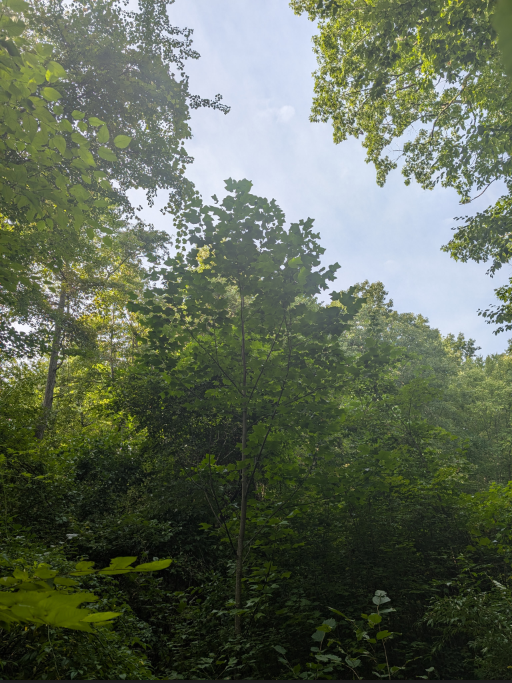
A tulip poplar tree (Liriodendron tulipifera) taking advantage of a canopy gap. This tree was likely advance regeneration that established in partial shade prior to the gap opening.
In most forested ecosystems, cleared or disturbed patches will eventually grow something back. The real question is what. Species composition largely determines what ecosystems services the forest provides including which wildlife it can support, what the timber is worth, how durable it is to drought, fire, or the next pest outbreak.
This means long-term forest management must always consider what the forest will become after a harvest is completed. Strategic, targeted removal of the right plants, timing harvests around seed years for the species you actually want, and in some ecosystems reintroducing fire or other natural disturbance patterns are all ways of managing the understory with intent. It's often the deciding factor of managing a forest that remains durable and ecologically valuable over time.
Next time you're standing under a stand of mature trees, look down for a second. That understory is the future forest.
References
Denslow, J. S. (1980). Gap partitioning among tropical rain forest trees. Biotropica, 12(2), 47–55. https://doi.org/10.2307/2388156
Loftis, D. L. (1990). A shelterwood method for regenerating red oak in the southern Appalachians. Forest Science, 36(4), 917–929. https://doi.org/10.1093/forestscience/36.4.917
Royo, A. A., & Carson, W. P. (2010). The formation of dense understory layers in forests worldwide: Consequences and implications for forest dynamics, biodiversity, and succession.
In J. M. Pye, H. M. Rauscher, Y. Sands, D. C. Lee, & J. S. Beatty (Eds.), Advances in threat assessment and their application to forest and rangeland management (Gen. Tech. Rep. PNW-GTR-802, Vol. 2, pp. 469–486). U.S. Department of Agriculture, Forest Service, Pacific Northwest and Southern Research Stations.
Thiffault, N., Fenton, N., Munson, A. D., Hébert, F., Fournier, R. A., Valeria, O., Bradley, R. L., Bergeron, Y., Grondin, P., Paré, D., & Joanisse, G. (2013). Managing understory vegetation for maintaining productivity in black spruce forests: A synthesis within a multi-scale research model. Forests, 4(3), 613–631. https://doi.org/10.3390/f4030613
Whitmore, T. C. (1989). Canopy gaps and the two major groups of forest species. Ecology, 70(3), 536–538.